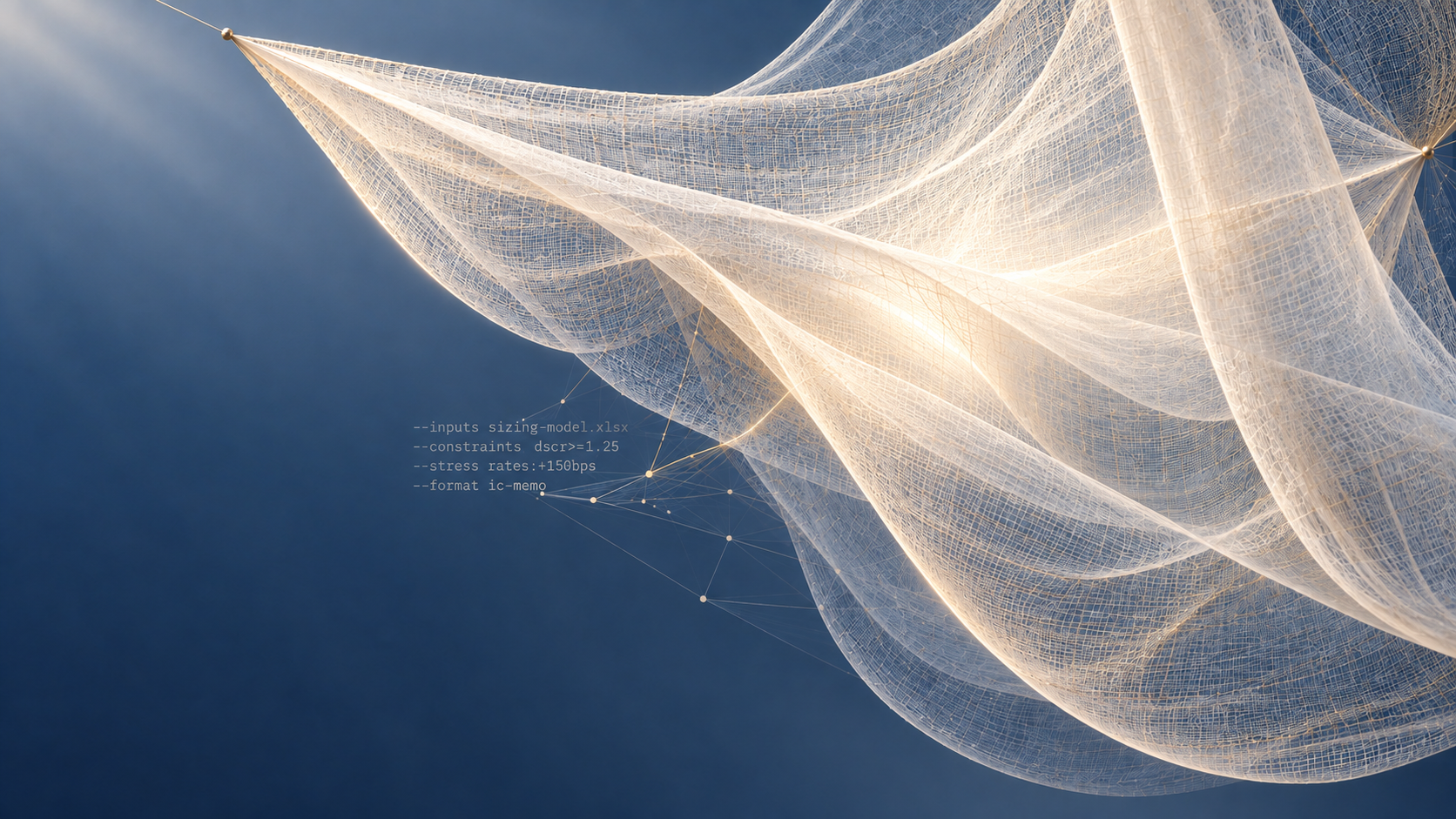
When I introduced OneShotLens as an evolving experiment in frontier technology, The Fabric encapsulated how I viewed that pursuit.
That may be difficult to see in its newly introduced state. The current design is already about the fifth evolution of the original idea.
The AI page animation began as a scrolling prompt used to analyze a commercial real estate transaction. It presented AI as an ordered process: define the inputs, set the constraints, run the work and produce the output. It was literal, but useful. That was what cutting-edge AI looked like to me at the time.
As I began exploring beyond the standard LLM installed on my work computer, I became interested in showing people new to the space how everything comes together. The models are only one part of the process. Applications, tools, data sources and human judgment all play a role in turning an idea into something functional.
If you follow the space closely, it seems there is a “game-changing” application or product release just about every day. It can be difficult to keep track of the latest and greatest across the full spectrum, let alone understand how all of those pieces might work together.
My first idea was a neural network with the site at its nucleus. As I have written before, one of the most useful ways to work with an LLM is to ask it to help expand a thought. You can begin with an incomplete idea, study what comes back, and use the response to discover a more interesting direction.
After developing a fairly basic but functional neural network, I wanted to push the concept in a more artistic direction.
A study in seven iterations
An idea taking shape.
$ oneshot deploy \
  --inputs sizing-model.xlsx,rent-roll.csv,t12.csv,debt-sched.csv \
  --guide multifamily-sizing-guide.yml --review-tier senior-credit \
  --constraints dscr>=1.25,ltv<=0.75,debt-yield>=0.08 \
  --underwrite noi,cap-rate,exit-value,irr,equity-multiple \
  --stress rates:+150bps,vacancy:+300bps,exit-cap:+50bps \
  --risk-flags concentration,rollover,capex-deferred \
--format ic-memo --tone executive --output pdf,pptx_The scrolling prompt
Instructions made visible. A commercial real estate analysis became the first way to show the work.
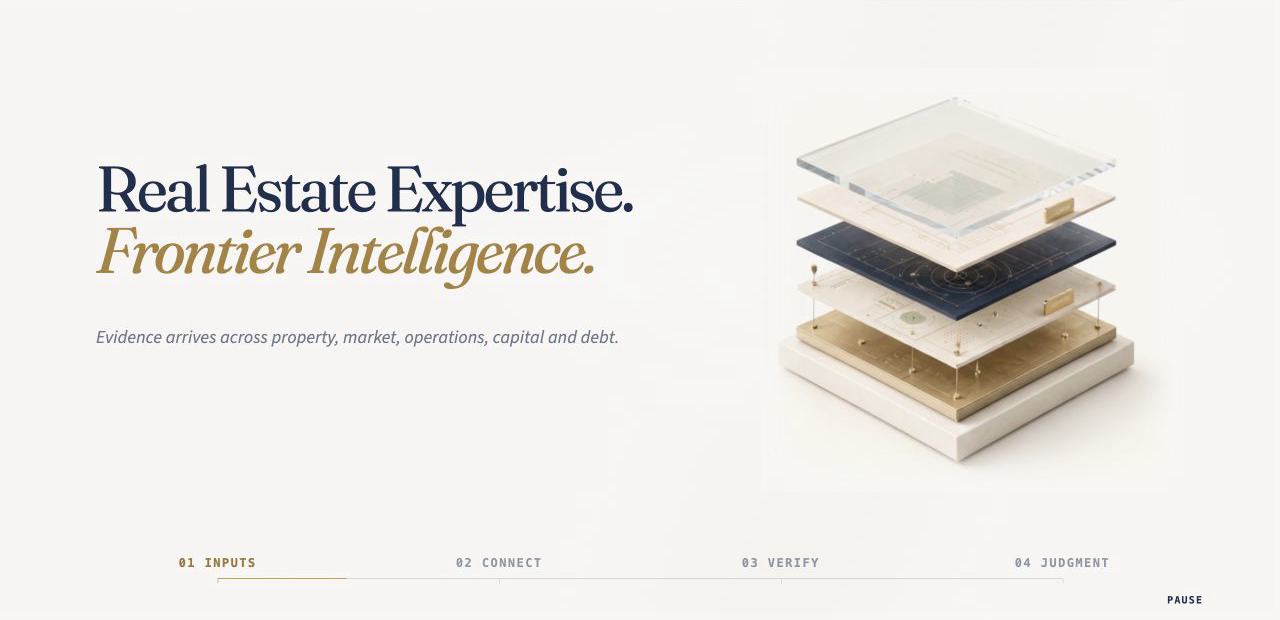
The architectural model
The process acquired layers. Inputs, tools and judgment became parts of one visible structure.
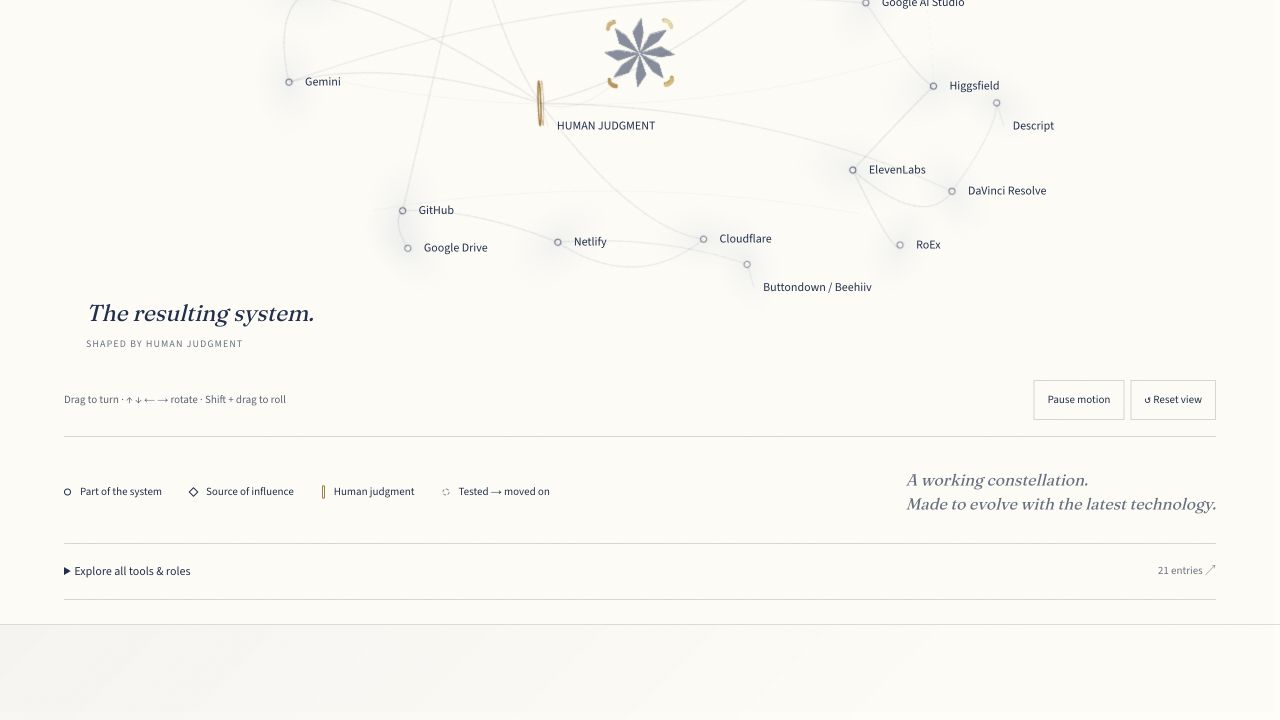
The neural network
Models and applications connected around the site, with human judgment at the center.
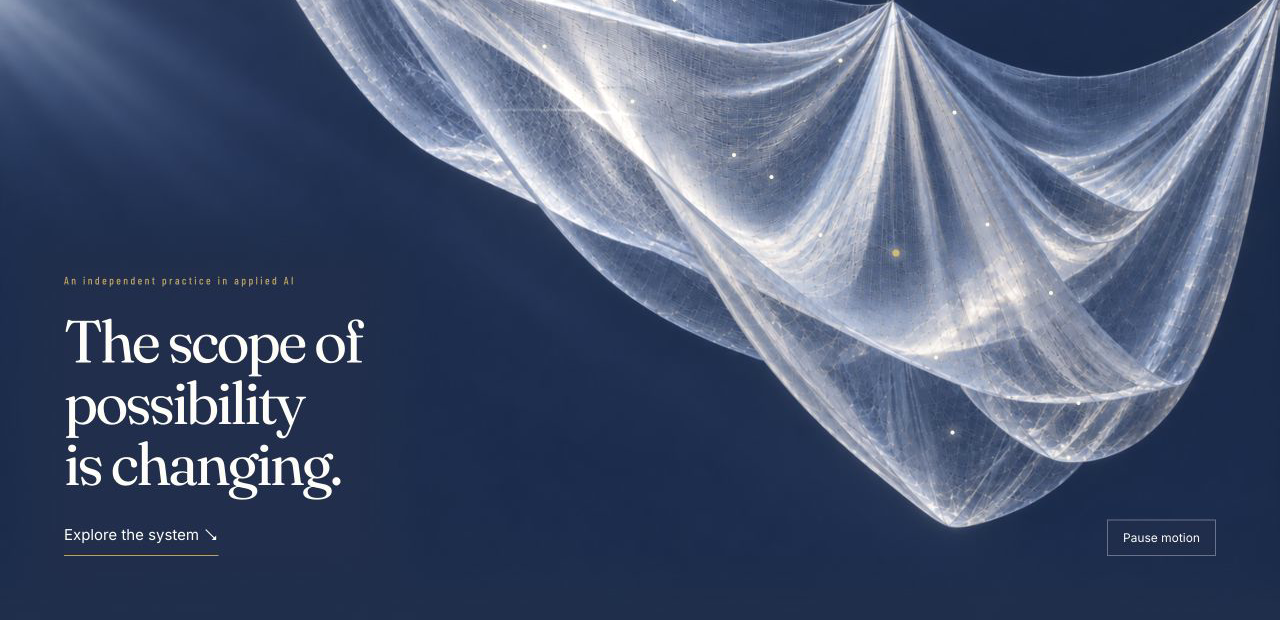
The first fabric
Connections became a continuous surface. The system began to feel like a material.
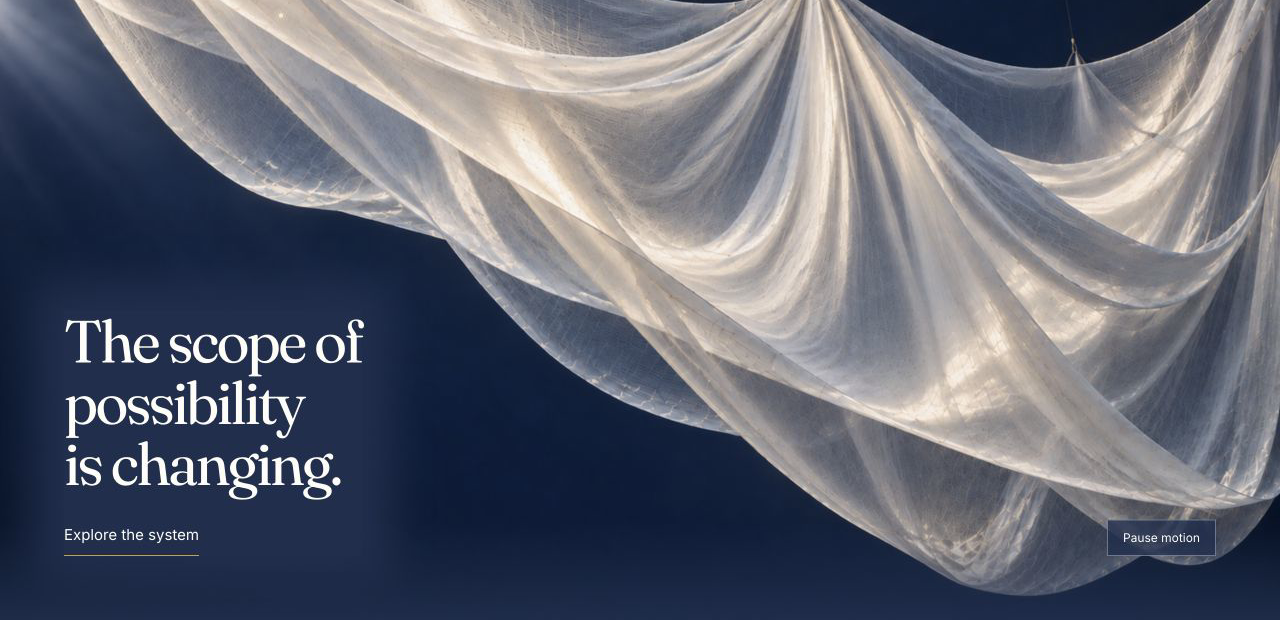
The material study
Light, transparency and gravity gave the surface depth and a more immersive presence.
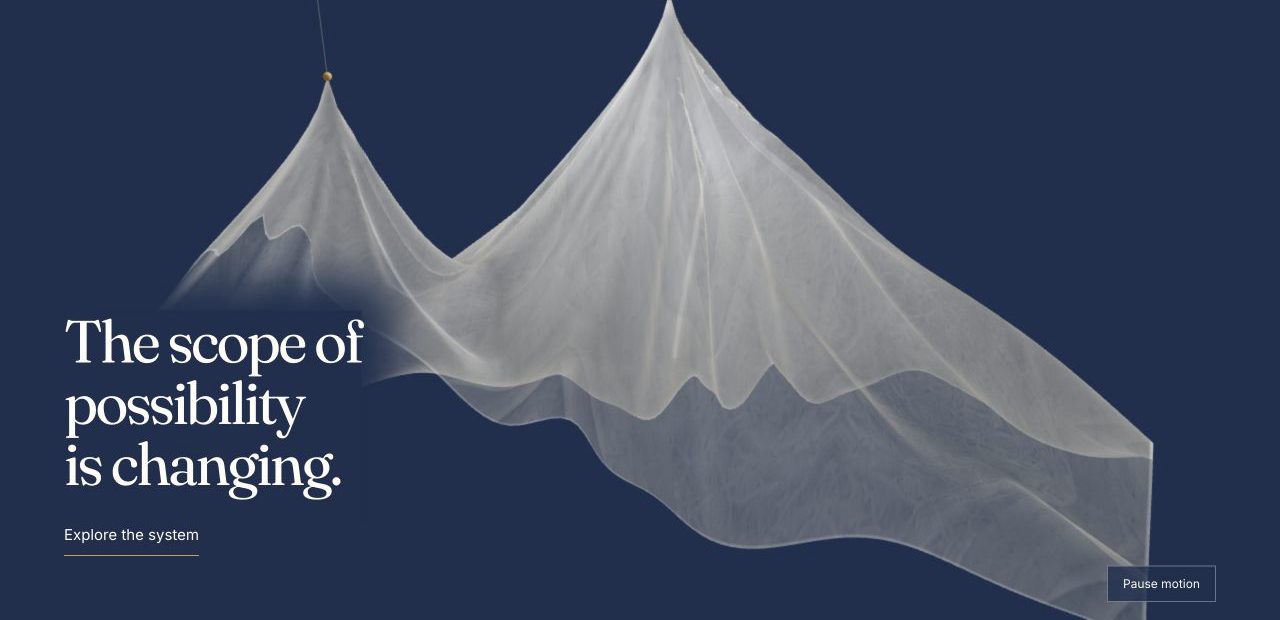
The living fabric
This iteration brought movement and interaction into the system, leaving room for it to evolve.
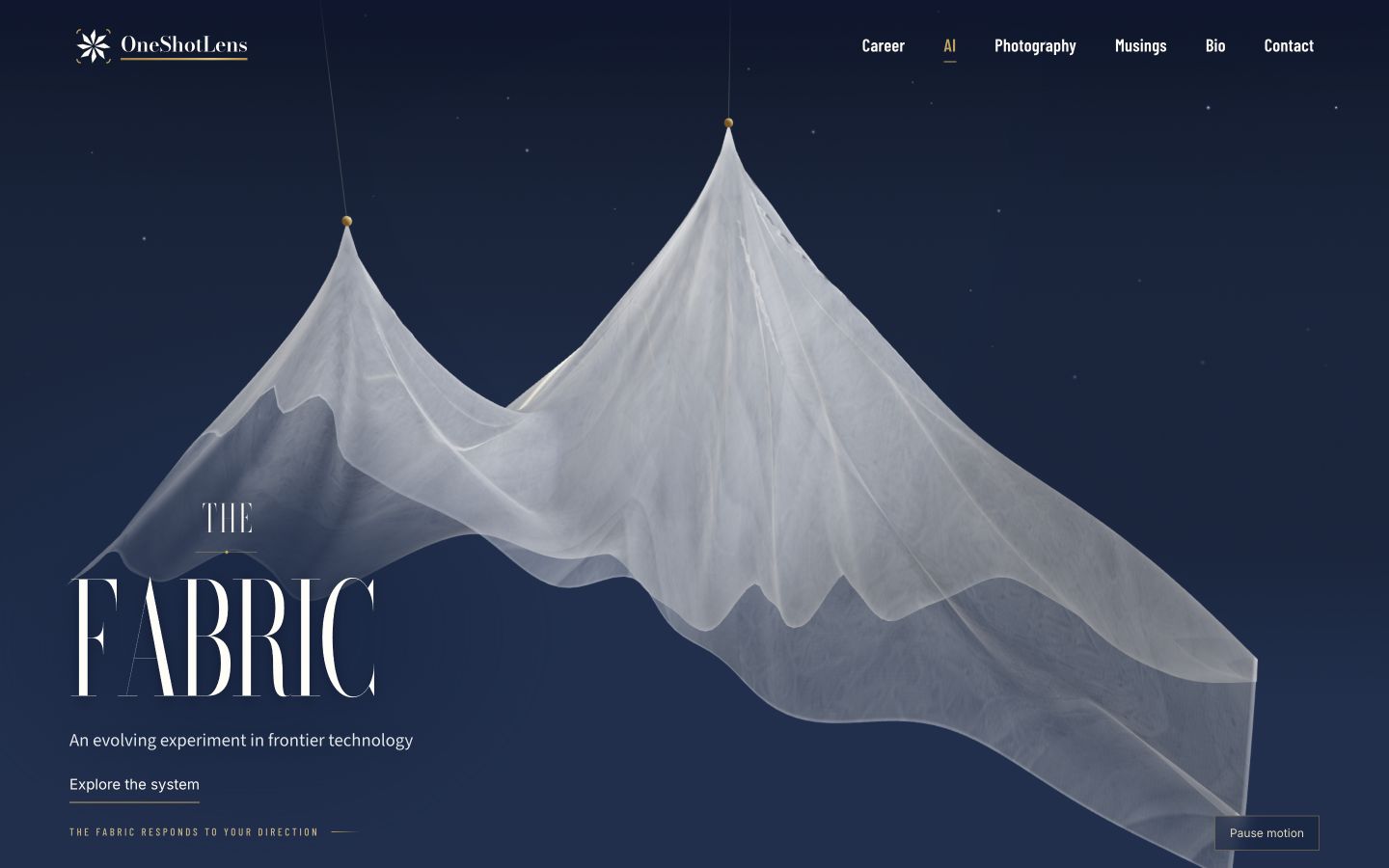
The fabric, illuminated
The form as it stands today: suspended silk, light guided by the visitor, and a view that turns with a drag. Below, the system connects models, tools and human judgment.
Scroll, swipe or explore each chapter
1 of 7. The scrolling prompt.
I was inspired by Dutch artist Boris Acket’s fabric installation at Fred again..’s 2025 live performances. I appreciated the way the work created an immersive experience without relying on the enormous video boards and lasers typically associated with electronic music. The fabric had scale and movement, but it also left room for imagination. It felt both controlled and alive.
Now, did I go see that show live? No. I watched it on YouTube, like most other 40-year-old dads.
But the idea stayed with me. That became the idea behind The Fabric.
One of the most useful discoveries along the way was gaining access to different models, applications and tools through connectors. They allow a user to describe a vision in natural language to a preferred LLM, while the connector handles much of the translation needed to carry out the work in a specialized or technical application. This can significantly flatten the learning curve, making it easier to bring an idea to life without first having to learn every tool involved.
The Fabric is intended to make that process visible. It shows how an application or tool is called and the role it plays within the larger system. Light passes through the fabric to illustrate how a request moves through the process on its way to completing a task.
I kept the controls on screen so each visitor can influence the experience. The rotation, brightness and wind strength can all be adjusted. The system is structured, but the final composition belongs in part to the person interacting with it.
The build went through many iterations as I incorporated it into the site, each of which is shown briefly in the carousel. I began the idea with Claude Sonnet, developed the current design in ChatGPT Astra 6, and completed the finishing polish in Opus 5.5. That progression feels appropriate. The work itself is a product of the changing technology it is meant to represent.
I plan for The Fabric to remain an evolving display of my understanding of the technology at a particular point in time, becoming more informational, more responsive and more immersive over time.
The Fabric is best experienced in a desktop web browser, where its movement, lighting and interactive controls can be seen in full.